About two years ago, floodproofing requirements for residential amenities and utilities in New York City changed. That’s not a long time relative to building cycles, and we periodically get questions about “the new changes.” Below, we explain what the changes were and how to know if they impact your property.
What it means to be a “residential” property
The 2022 NYC Building Code defines two different types of buildings when considering the requirements for floodproofing in an area of special flood hazard. As defined in BC 202 for flood zone purposes only:
“Residential” buildings only include residential occupancies R-1, R-2, or R-3, or I-1, and accessory uses (zoning).
“Non-residential” buildings are buildings that either include no residential occupancies, or which may include residential occupancies; however, they also include a space located below the design flood elevation that is not residential or accessory to the residences.
Non-residential buildings are quite common in New York City and include any residential building that has retail or offices on the ground floor, basement or cellar levels below the residences.
If your building is residential
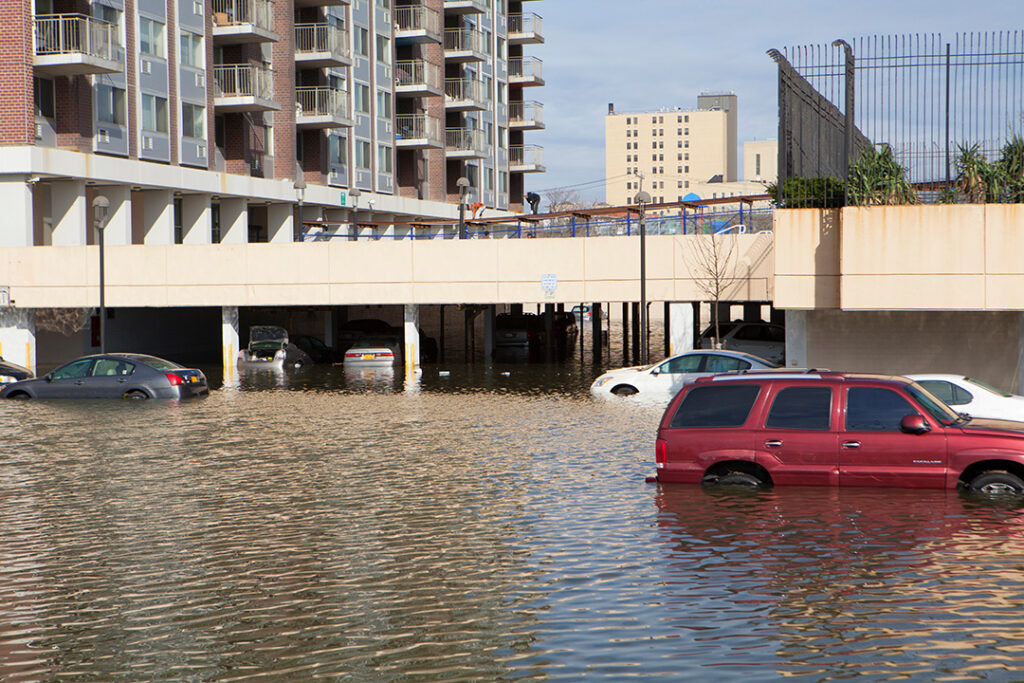
In any “A-Zone” indicated on the flood maps (FIRM), buildings that are entirely residential must be elevated above the design flood elevation. The only allowable uses for space below the design flood elevation is for parking of vehicles, storage, or crawlspace. Such spaces must be wet floodproofed, meaning that they must naturally allow flood waters to enter and exit.
If your building is non-residential
Buildings that are non-residential, however, are allowed to have occupancies below the design flood elevation, provided these occupancies are “dry floodproofed.” This means that they are protected from floodwater by a structural and waterproofed enclosure. No residential occupancy is permitted to be in a dry floodproof enclosure.
What about ancillary spaces?
FEMA has issued further guidance regarding the location of uses that are ancillary to or otherwise accessory to the residences, such as amenity spaces and utilities or mechanical equipment that serve the residences.
Because residential occupancies must be located entirely above the design floor elevation, all accessory and ancillary spaces and equipment must also be located above the design flood elevation.
What about mixed-use buildings?
Not surprisingly, there was some initial confusion about how a mixed-use building would be classified for flood prevention purposes. To clarify how mixed-use buildings with both residential and non-residential occupancies would be regulated, the Department of Buildings issued Buildings Bulletin BB 2022-001. Highlights of that bulletin include:
- Dry floodproofing of residential structures or residential areas of mixed-use structures is not permitted.
- Ancillary areas supporting residential units are also prohibited from being located within dry floodproofed enclosures below the design flood elevation.
- Ancillary areas include lobbies, foyers, offices, mailrooms not required by USPS, meeting rooms and exercise rooms, and when supporting residential units, must be elevated above the design flood elevation.
- Only building utility systems and attendant equipment that serve non-residential buildings and non-residential portions of mixed-use buildings are allowed in dry floodproofed areas.
- Utilities and attendant equipment supporting residential units in mixed-use buildings are prohibited from being located within dry floodproofed enclosures below the design flood elevation and this requirement applies to building systems that support both commercial and residential uses in mixed-use buildings.
Noncompliance with floodproofing requirements can result in property damage, increased insurance premiums or inability to be insured, and fines. Make sure your property is compliant.