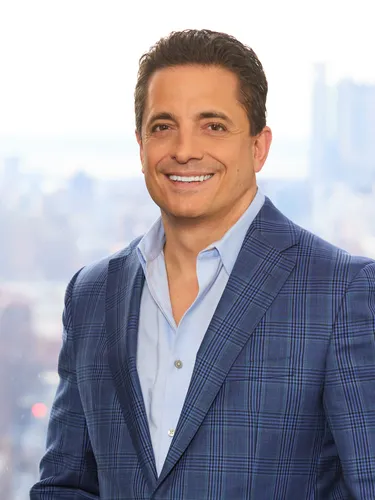
Vince Prezioso, Licensed RE Salesperson at The Corcoran Group, spoke with Design 2147 CEO Sisto Martello about what’s happening in Queens real estate right now, from land pricing and rent-stabilized buildings to the City of Yes and where the borough is headed. Here are some of the highlights.
Q: Is the Queens market still hot?
A: The Queens market is very hot, Sisto, but there’s a lot of nuance to that word hot right now, because priced well, priced fairly, sellers and buyers, there’s a huge distance with a lot of properties. The cost of money is high, so underwriting is very disciplined. It has to make sense. Do the tax benefits make sense? Does the developer qualify for tax benefits like ICAPS, 45X? The question is, is the package making sense. If it makes sense, the buyers will transact.
Q: We’re’re currently working on a complex site together. What makes that property so difficult to sell?
A: Besides issues with debt, there’s issues of different zoning, three zoning districts, on a triangle piece of property. FAA regulations – It’s in a flight path by the airport, so there’s a lot of complexity to that property. So as a broker, the job is, how do I create certainty for a buyer? That’s not easy. Getting from a place where it looks very complex and uncertain to, how can I convince a buyer that it’s certain? So, speaking with you, get a zoning analysis, get a really good understanding of the details on a very deep level of what the zoning is. Bring on a land use attorney. Go for the zoning increase.
Q: How did a nearby zoning map change end up helping that deal?
A: That was the map change that took place a block away. That was for a large part of the neighborhood. And we were right outside that change that was done in 2014, so the neighborhood was obviously moving in that direction. And that’s where we’re headed. This shows our land use attorney that the city has already been amenable to upzoning this area, which is good for us.
Q: There’s a lot of confusion around the City of Yes. What was it actually designed to do?
A: Well, I try to give the best understanding of what City of Yes is. It was designed to increase residential for the most part: getting rid of the parking mandates, building parking spots for a certain number of residential units. Once the parking mandate is gone and you can build a lot more, you don’t have to worry about spending all that money on parking. Now, also enhancing residential units in transit zones, low density transit zones, and wide streets. So that’s really what City of Yes was designed for. And it’s been really helpful.
Q: How does that compare to the way the city approached housing and zoning under the previous administrations?
A: Well, I feel like philosophically we’ve turned the corner, because even during Bloomberg’s era and de Blasio’s era, there was always talk about housing, but there was always the fear of gentrification. They’d find an area and say, “We need to put housing here, but if we put housing, it’s going to enhance the property values, the area’s going to get gentrified.” Now it’s more like, “We need 300 units here, and if we can’t build them here, then where are we going to put them?” So now it’s more of a direct focus on housing, and more lenient in terms of approving zoning applications.
Q: There’s been talk of foreclosures coming for rent-stabilized buildings. What changed?
A: Well, since the HSTPA, the Tenant Protection Act, passed in 2019, it got rid of all the vacancy increases. So basically, if you bought a rent-stabilized building pre-2019 as an investor, you underwrote it based on deregulation. So now you have a note maturing. You paid $14 million, the building’s worth $9 million or $7 million. You want to refinance, but you can’t. Now there’s no rental increases either with stabilized buildings, and expenses went up. So there’s a huge problem out here right now.
Q: If owners can’t refinance and can’t raise rents, who ends up taking on these buildings?
A: That’s the problem, with cash, with a building that’s been underwater for 10 years. Everything’s cyclical. I do believe that this rent stabilization process has to crash, because it’s so inefficient. It’s so backwards. It has to crash, just like any inefficient process has to crash.
Q: What does it actually take to sell a rent-stabilized building today?
A: Rent-stabilized buildings, even good ones, are so complex and difficult to sell in this environment. I have buildings now in Sunnyside, which I mentioned to you, two semi-attached ten-families. So, 20 units, 12 free-market. That’s actually very good, but there’s a huge caveat to it. All the investors who are interested in buying these properties want IAI paperwork from 20 years ago. They want canceled checks. If you replaced the kitchen in 2005, they want to see the payment. They want all the documents, very specific. They want to trace the process of the unit going from stabilization out of stabilization, because if they can’t, they are taking on this risk that the unit was illegally deregulated. So I’ve been in a battle right now with these buildings to create certainty for a few different investors I’m dealing with. Fortunately, the owners are pretty good, they have a lot of their documentation. It’s in a garage in multiple bins, and they have to sift through it. It’s a lot of work. But you’re creating that certainty that this unit has evolved from stabilization through apartment improvements, through vacancy increases. The HCR, the 2011 threshold, was when the legal rent crosses $2,000. So we have units that are documented where the rent was $1,700 in 2009, and there was a vacancy, and the increase was 20%. You’ll never really prove it 100%, that’s really difficult, but you have to make your case, basically like a lawyer, showing how these units have evolved through stabilization.
Q: How much does a building’s rental history affect its value at sale?
A: If the units are all occupied at premium market rents, this is the best-case scenario, the owner will get the best price. If this is a stabilized building with low legal rents or even a free market building with low rents or if there are non-paying tenants, then getting a strong price will be an uphill battle.
Q: What about buyers who purchased during the cheap money years? How are they doing now?
A: Well, even the last cycle, when money was cheap, in 2021, 2022, on the residential side, a lot of those buyers that bought during that time and are selling now are selling at a loss. The math doesn’t pencil out.
Q: Heading into the fall, what’s happening with inventory and land?
A: Right now land is hot. And I believe that’s because of what’s happening in the city, the demand for housing, the political environment. Developers in good areas are looking for property they can build on, get it for a good number, and get a tax benefit. Small buildings are hot too. I recently closed on a property in Flushing, an 8,000-square-foot property in a great neighborhood. It was the only large lot available there, a two-family knockdown. It sold for almost $3 million. They’re going to put three-families on it, right by Kissena Park.
Q: How has the free-market multi-family segment held up?
A: You have a tale of so many different markets. Right now, the multi-family market in Queens, it’s not always hot, but it stays hot for the most part. It goes from warm to hot. Everybody’s looking for the three-family, the four-family, anything free-market. Those deals always transact cash. Free-market has gone up consistently throughout the years. I’ve been in Astoria 10 years, so it’s gone up. It maybe took a little bit of a dip early in the COVID times, when nobody knew what was going on, and then it came roaring back. I just sold a beautiful one by Astoria Park, a four-family, great condition, transacted at $1,95m. It was the third highest sale in its class to transact in Astoria at that time, and this was only a few months ago. Free market, four-family, and it transacted just under a 5 cap, too. So in Astoria, you’ll get that.
Q: Where in Queens is land still available for these kinds of deals?
A: Queens is geographically the largest borough. If you’re going to find some land, you’re going to find it probably in Queens, especially in Jamaica and the Rockaways
Q: What’s your approach to working with other experts on a deal like this?
A: Since you mentioned that, I have to give a shout to Chris Cavorti, my partner on that listing. Chris is a brilliant broker. When I started in real estate, I thought, “Okay, it’s my job to know everything.” And then I realized there’s no way I’m ever going to know everything. So now my job is to answer what I can, verify the questions I’m being asked, and find the right expert to get the best answer. Chris and I needed to talk to Sisto, and we needed the zoning analysis. That’s a perfect example.
Q: Looking ahead, where do you think Queens is going? Will affordable housing push development beyond the usual hot spots like Long Island City and Williamsburg?
A: I think that in Queens, the rents are very strong, but they’re also significantly less than in Manhattan or Brooklyn. I think there’s still a lot of value to living in Queens. I used to refer to where I live, the Ditmars side of Astoria, as New York City’s best-kept secret. Easy transportation, a quick ride to 59th and Lex, great restaurants. I park my car on the street, which is unheard of for New York City. Astoria Park is right there. The Rowan went up in 2022, and now The Rowan 2 is going up, another 50 units. The Sophie on Steinway Street, all these boutique buildings. Vernon Boulevard boomed. Actually, below 21st Street in Astoria, over the past six years, has absolutely boomed. New buildings, new buildings, 45th Street. Sunnyside, Woodside, they’re the slow and steady growers. Flushing is its own little sub-market, 60 to 70% Asian, a lot of foreign money. That’s an economic center. The soccer stadium’s going up. And the airport, right? $19 billion going into JFK, $8 billion into LaGuardia. LaGuardia went from the worst-ranked airport in the US to the 1st-ranked airport in the US. It’s gorgeous, and easy to get to. Great examples here where Queens is headed.