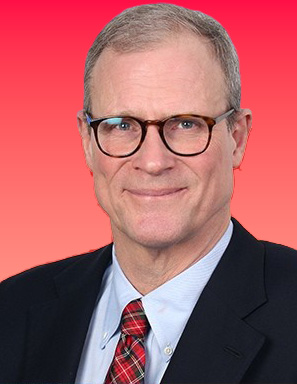
F. Eric Goshow, FAIA, Founding Partner of Goshow Architects, recently spoke with Design 2147 CEO Sisto Martello about the current New York City housing crisis and the programs designed to address it.
Q. New York City is in a housing crisis. What are you seeing and hearing about it?
A. The New York City Housing Authority (NYCHA) has been a big client of ours over the years, and it’s kind of a shame that the money necessary to maintain existing housing is not there. How many housing units does NYCHA have? 177,000, I think. Just keeping the existing product in good shape is enormously expensive, and it somehow has gotten a little bit out of hand. So we are very happily involved with NYCHA because it’s part of what we very strongly believe in. First of all, maintain what you’ve got.
Q. What do you think of the Permanent Affordability Commitment Together (PACT) program, which partners with private developers and management companies to help maintain NYCHA housing?
A. We love the “P3” model, the public-private partnerships. To bring the private sector into this game, I think, is very important. We’re very much involved in that in several ways. It’s very important for us to bring everybody and all the resources possible into this. I think the PACT program is really good. The thing is, why didn’t they do this years and years ago?
Q. You’ve spoken about reducing bureaucracy as a priority. Can you give an example of where red tape has gotten in the way?
A. You’re talking about something that all of us are really big on, reducing the bureaucracy. Making things happen, getting things done is so important. We just finished an affordable housing project in the Lower East Side, and when the crane came in to start lifting the floor planks in place, we had this enormous problem because there was a tree on the site. It was a nightmare. It just slowed everything down so much, and there are so many ways around it that if you let us work our way around it, we’ll help. But it’s not a question of partnering, it’s a question of preventing things from happening, and that’s something that, of course, we need to change. I do believe in the Department of Buildings and what they do. I feel like a partner with them. I want them to review our stuff.
Q. Some argue that the cost of building is too high to justify. How do you think about that?
A. I’m sitting in my little office room in my apartment today, not in my regular office. The building was built in 1930, so now it’s going to soon be 100 years old. It’s still serving a need. I love living here, and it’s a great building, a great pre-war building. And when you think about a building that’s going to last 100 years, of course, it’s going to cost a lot to build. But when you amortize, when you think about it, over the lifetime of a building, it’s not terribly expensive. It’s worth the money.
And once again, I think about the 133,000 units — and did I get that one right, that NYCHA has? What the Mamdani administration has been talking about, just reading in the paper about building a platform in Queens to build housing. How many housing units will this enormous platform hold? 12,000. When you compare the difference, to me, it’s amazing. And we need many more housing units than that.
Q. What solutions do you see for adding housing units beyond large-scale new construction?
A. Two things come to mind. One is micro units. Small units. People in faraway countries live very well in smaller units with completed kitchens and bathrooms. You can do it all, but you don’t have to have it in the sizes that are mandated here. And for some people, that’s really, really important. Another thing is ADUs, alternate dwelling units on sites. And we want to pass that kind of legislation, that’s one thing, but will it actually happen without public help in terms of some sort of tax subsidy or some help to the single-family owner who doesn’t have a clue about how to do that. They’d love that extra income. They don’t know how to do it. And so you need the government to come in and help. The government’s there for a reason, and it’s valuable. And although a lot of people think that government gets in the way, well, it can, but nothing’s going to happen without a government that wants to help.
Q. What happens when legislation like ADU allowances passes but isn’t properly implemented?
A. Just by creating a law that allows for ADUs and think that they’ve accomplished something, nothing’s been accomplished unless somebody can step in and implement it in a way that makes sense for people. And another thing that I’m really worried about, I’m very involved in my chapter of the AIA here in New York City, and I’m a member of the housing committee. We had a group come in to talk to us about their group of building owners of affordable existing homes that are rent stabilized and rent controlled. And they came in and their problem is, and it’s a real problem, because many of these home landlords are small guys, not big guys, and they cannot afford to bring their units up to code compliance, so they’re letting them sit there, and there’s maybe as many as, I’ve been told, as many as 50,000 units held off the market.
Q. Local Law 97 adds further compliance burdens. What is the impact of that on top of everything else?
A. Boy, you said it. And now with all these things, Local Law 97. I mean, what are we going to do? It’s not just the interior of a unit. You might have a boiler that’s 50 years old. No insulation in the exterior walls.
Q. How important is it to mentor the next generation of architects, and how are you mentoring?
A. Well, first of all, it’s so important that there is a next generation who is as enthusiastic as we are and more creative and young and energetic. The future is the next generation, and so we have to be very conscious of that.
When I was elevated to fellowship of the American Institute of Architects, the College of Fellows, we had a big black-tie dinner. And there’s two things you must do as a Fellow, we were told by the chancellor. Number one is contribute to the scholarship funds that we put out, and number two is mentor young people. So I came back to New York City, and I looked around in my chapter, who has a lot of fellows. It’s the biggest chapter. It’s the 800-pound gorilla of chapters nationwide. And what are we doing? Well, they were doing nothing in terms of actually mentoring, and there are several hundred fellows. I’m bragging here a little bit, but I got together with two colleagues that were in the young professionals group, and I said, “Let’s set up a mentoring program together.” And we did. There were two young people and myself, and then we brought in a few other fellows, a few other young people. We set up an organization called Torch, as in passing the torch. And now we do a one-on-one mentoring, and it’s grown enormously in the years since then.
That’s really important, getting the people who’ve been around for a long time to let young people know that there’s a future for them and that they shouldn’t be afraid of it, even with AI and all that, that there’s a place for them, and it’s a wonderful profession to be in. Being a Pratt graduate, Pratt has a wonderful program too. I have a young woman who’s a mentee or protege of mine that I’m dealing with right now. And each year we get a new person. But the thing is, if you’re really into this, they become your lifelong friends.
Q. What do you say to young architects who are still figuring out where they fit in the profession?
A. Architects have lots of different ways you can get involved in the field of architecture. As a designer, as a business person, into code stuff, into specifications, into field work, or working outside of the direct field of architecture, working for a contractor or in the city government. There’s so many different ways. And that’s one of the things that I want to make sure that the young people understand that you’re getting a great education learning to solve problems, and you can take that education and go in any different way. And so many people who are just in school or just recently graduated from school, they still don’t know exactly where they’re going to fit in. You tell them it’s okay.
Q. How do you think architecture and AI will coexist going forward?
A. That’s hard to know right now. So many things are happening so quickly.
Should we fear AI? I don’t think so. I think there’s so many ways in which we can interact with the world as it is and what we’re going to learn from that experience. We use ChatGPT and stuff in different ways. It’s a real asset for us.
Another way of looking at it for me, though, is how might I fear it? I might fear it because people only care about money. We do not want to spend money in buildings or in the design process, and anything that can reduce the time and money involved is good. And it’s scary for us because what are we about, if not dignity? About the idea that people deserve a well-lived life and good design counts, and that is still a very humanistic proposition. There will always be, I think, a point of us, but the whole idea of money is always going to be there, and it’s always going to be a challenge for us to prove our worth in terms of the future of the human physical environment and its value to life.
On the other hand, we like to say, when is design finished? Answer, never.
Q. Where do you think housing in New York City is headed over the next few years?
A. I’m a bit negative for two reasons. Number one, when is a city full? When is it done? When are the logistics of getting to the center so difficult that we need a different kind of center? For me, the growth of New York, if we want to talk about it from that point of view, the Brooklyn centers and Queens centers are new centers. Not everything needs to go to Midtown Manhattan. When you look at the subway system, it’s all focused toward here. And it shouldn’t be. It should be much more spread out and going directly from Brooklyn to Queens and the Bronx and all that sort of thing. So, the city has to change its physical characteristics a little bit to make it a more usable and friendly city, I think.
There’s a lot of interest in infrastructure, but it’s extremely expensive. And it’s very, very long-term, far longer than the term of a mayor or a councilman. You have to really be willing to think long-term about that.
The second thing is that building new housing and some of the affordable housing buildings that are going up now are not like they used to be, where I remember we used to say, you could always tell a Section 202, which is senior citizens housing. I mean, they’re the dumbest little boxes you can imagine. And we don’t want to do that anymore. We want to do handsome. We want to give people dignity, and some of the new affordable housing buildings that are going up these days are really quite wonderful.
My problem with that is, if it’s a problem, it’s that the city’s population is growing, and the more good stuff we build will attract more people to want to come. So we’re not just giving the existing people better housing, we are inviting more and more people. Can you get ahead of this? I mean, can you build enough housing that’s going to attract more people? And you have to keep building and building, building. So the change in the city, from infrastructure point of view and different nodes of places that can grow, that are now less than overbuilt, is really, really important to know.
Q. What is your take on the City of Yes zoning initiative?
A. Why didn’t they do this years and years ago? Now that we have a new mayor and they always want to diss the prior one, this is one place where they should not do that. The city should be built upon, in my view.